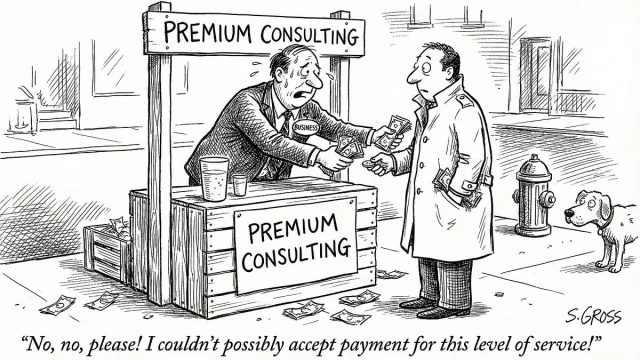
The “Nice Guy” Tax
Chris Young
Many people undercharge because they want to be liked, but this hurts their business and causes stress. Low prices make clients doubt your value and often lead to more work and less respect. Confidently stating your true price without apology helps you earn what you deserve and keeps clients happy.
22 Jul 2026
You know the feeling. You type out the price. It’s the number you know you need to charge to make a profit. It’s the fair number. But then, your fingers hover. Your throat tightens. A little voice in your head whispers: “What if they think I’m greedy? What if they say no? What if they get angry?”
So, you backspace. You lower the number by 15%. You add a paragraph that says, “I’m happy to be flexible on this!” or “Let me know if this fits your budget!”
You hit send, and you let out a breath, relieved that you avoided the conflict. You think you just secured a client.
You didn’t secure a client. You just agreed to subsidise a stranger’s business.This is the Nice Guy Tax. It is the gap between what you are worth and what you charge, and you pay it every single day in the currency of your own insecurity.
When you undercharge, you aren’t doing the client a favour. You are telling them, subconsciously: “I am not confident in my product. There is a catch. I am desperate.”
Nobody wants to eat discount sushi. Nobody wants to hire a desperate consultant. By trying to be “accessible,” you are actually making high-quality clients trust you less.
Charging your worth is actually the most generous thing you can do for your client, because it guarantees you will care enough to do a good job.
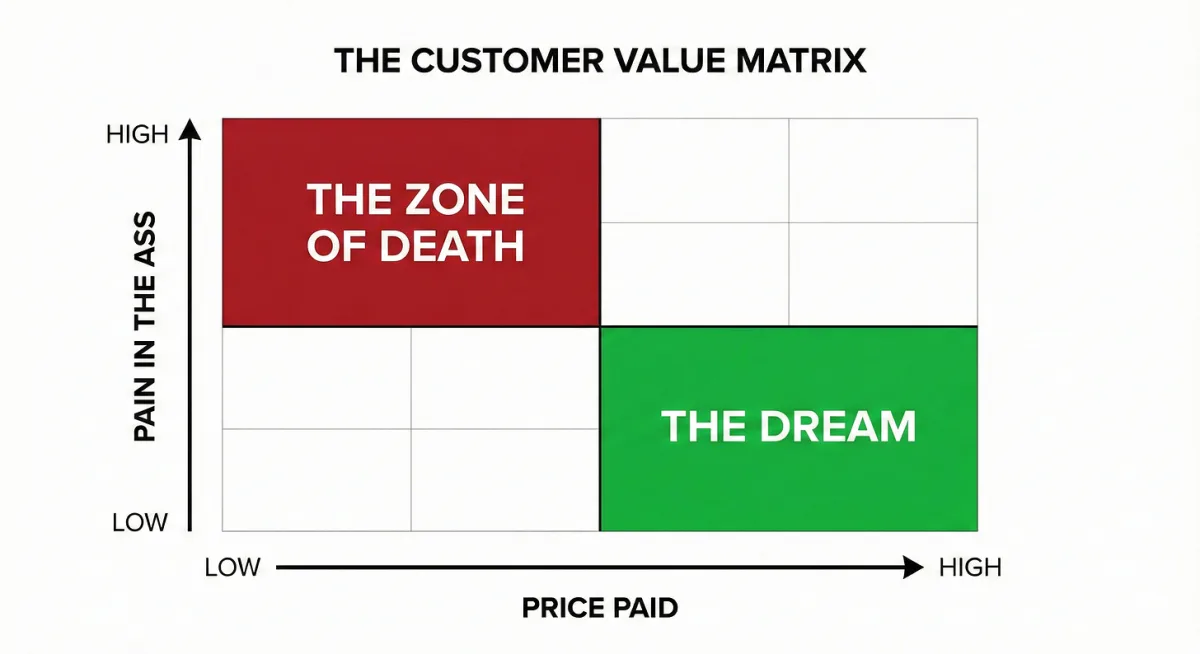
The Visual: The Client Headache Matrix
Look at the matrix above. There is a universal law in business: The less they pay, the more they complain.
Clients who pay $500 want to micromanage the font size. Clients who pay $50,000 want to know if the strategy is sound, and then they get out of your way. Why? Because high-paying clients are usually busy, successful people who value results. Low-paying clients are usually anxious bargain-hunters who value control.
The Flinch is that split second after you state the price when you feel the urge to apologise. “The price is R50,000... [uncomfortable silence] ...but we can probably do R40,000 if that’s too high.”
Stop it. Kill the apology.
Use the State and Wait technique:
State the price clearly. “The investment for this project is R50,000.”
Shut up.
Do not speak. Do not qualify. Do not fill the silence. The next person to speak loses.
If you can hold that silence for just 4 seconds, you project supreme confidence. You signal that the price is the price because the value is the value. Usually, the client will break the silence with: “Okay. When can we start?”
If the price doesn’t make you feel slightly uncomfortable when you say it, it’s too low. Go back to that quote you’re about to send. Delete the apology. Add 20%.