Tantra vs Vipassana
Jude Star
The text compares two meditation practices: Vipassana and Tantra. Vipassana focuses on seeing reality clearly, while Tantra uses imagination and visualization for transformation. Both approaches aim to expand awareness and perception, leading to a deeper understanding of ourselves and the world.
14 Jan 2025
You see, the Buddha claimed we’re are all deluded, that we don’t experience reality as it really is. Modern science backs this up, with a lot of studies showing that most of what we experience is actually constructed by our brain.
In short, we take in pieces of sensory experience and our brain puts together the bigger picture based on what it expects to see, hear, and feel.
Well, the Buddha taught that this misconception is actually the primary cause of our suffering, and keeps us from finding lasting contentment. He laid out a path to overcome this ignorance, and see ourselves and the world more and more for what they actually are.
Seeing things more clearly brings about “insight”, and these insights change us.
They bring about a sense of relief. A feeling of timeless freedom. Contentment. A pervasive sense that everything, without exception, is somehow fundamentally ok.
So we can say that the practice of Vipassana is to really look. To notice that much of our experience is a self-imposed limiting construct, and that seeing things more and more as they are internally untangles us and brings about a fundamental and unconditional sense of wellbeing.
Tantric masters were radically inclusive, claiming that realizing ultimate truth is available to everyone, not just those who have taken vows and sworn off material pleasures.
Tantra’s radical reformulation at this time can be summed up in the iconic line from one of the most utilized Buddhist texts, the Heart Sutra:
“Form is emptiness. Emptiness is form.”
This is true non-duality, where it’s realized that seeking and celebrating oneness and rejecting duality is its own form of duality.
So instead of rejecting the world and its contents, we can instead use these things, use anything and everything, as vehicles for liberation.
This is why Tantra, in some circles, became synonymous with sex. Previously sex and sexual energy was seen as a distraction from realizing ultimate truth, but now it was seen as a potent avenue for realization.
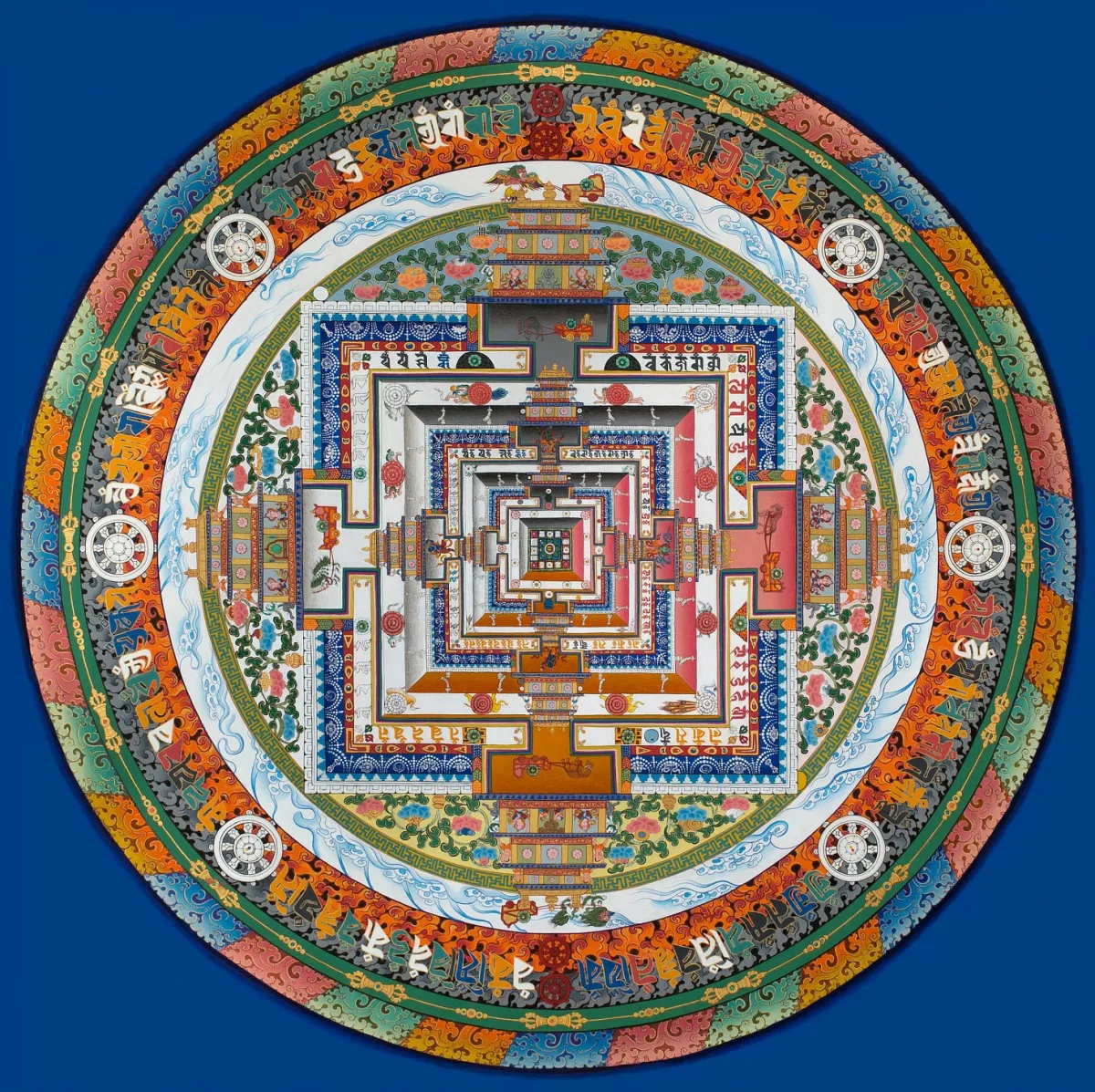
When we practice Tantra in Tibetan Buddhism, we imagine ourselves becoming the deity and embodying (and radiating) these awakened qualities of being. We use our imagination to cultivate — or more accurately reveal — our true awakened nature.
To put it simply, imagining yourself as your best self helps you become your best self.
While Vipassana practice deconstructs our perception of reality to reveal its true nature, Tantra uses imagination and visualization to shift our self-perception and bridge into a more luminous reality.