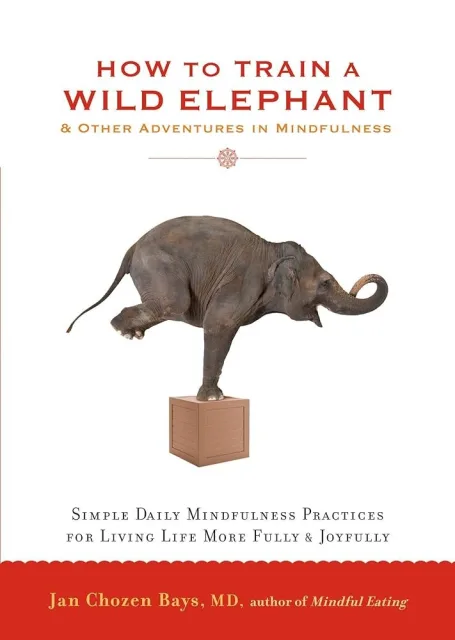
How to Train a Wild Elephant
Jan Chozen Bays
Mindfulness is about being present in each moment, starting with small practices like taking deep breaths before answering the phone. As you incorporate mindfulness into daily activities, you become more aware and curious about life, even in challenging situations. This practice helps calm your mind, reduce anxiety, and improve your overall well-being.
17 Mar 2025
Anxiety is the subtle and pervasive destroyer of our happiness. It depends upon thoughts of past and future. It cannot exist in the present.
12 May 2025
Ironically, a mind filled with anxiety is likely to create what it most fears. The anxious mind doesn’t realize that when it pulls us into daydreams of regret about the past, we are not attending to the present. When we are unable to be present, we tend not to act wisely or skillfully. We are more likely to do the very thing the mind worries we will do.
Unfortunately the mind, in its anxiety for us, tries to make plans for a huge number of possible futures, most of which will never arrive. This constant leapfrogging into the future is a waste of our mental and emotional energy. The most important way we can prepare for the unknown-to-come is to make a reasonable plan and then to pay attention to what is happening right now. Then we can greet what flows toward us with a clear, flexible mind and an open heart, ready and able to modify our plan according to the reality of the moment.
Anxiety is fueled by thoughts of past and future. When we drop those thoughts, we drop anxiety and find ourselves at ease. How do we drop thoughts? We drop thoughts by temporarily withdrawing energy from the thinking function of the mind and redirecting it to the awareness function of the mind. This deliberate infusion of awareness is the essence of mindfulness. Relaxed, alert awareness is the antidote to anxiety and fear, both our own and others’. It is an ecologically beneficial way to live a human life; it changes the atmosphere for the better.
Over the years, we have found that the most difficult part of our weekly mindfulness practices is just remembering to do them. So we’ve invented various ways to remind ourselves throughout the day and week. Often we stick words or small images up around the monastery where we are likely to encounter them. You can print out our simple reminders at www.shambhala.com/howtotrain.
A mindfulness practice notebook
To help you get the most out of these practices, I recommend using a notebook to record what you experience and learn as you work with each mindfulness exercise.
Use Your Nondominant Hand
The Exercise
Use your nondominant hand for some ordinary tasks each day. These could include brushing your teeth, combing your hair, or eating with the nondominant hand for at least part of each meal. If you’re up for a big challenge, try using the nondominant hand when writing or when eating with chopsticks.
13 May 2025
Struggling to use the nondominant hand can awaken our compassion for anyone who is clumsy or unskilled, such as a person who has had disabilities, injuries, or a stroke. We briefly see how much we take for granted scores of simple movements that many people cannot make.
Using the nondominant hand reveals our impatience. It can help us become more flexible and discover that we are never too old to learn new tricks. If we practice using the nondominant hand frequently, over time we can watch our skill develop.
17 May 2025
Leave No Trace
The Exercise
Choose one room of your house and for one week try leaving no trace that you’ve used that space. The bathroom or kitchen works best for most people. If you’ve been doing something in that room, cooking a meal or taking a shower, clean up in such a way that you leave no signs that you’ve been there, except perhaps the odor of food or fragrance of soap.
19 May 2025
This task helps us become aware of the tendency to turn away from doing certain things, even small things that we could take care of during the day but somehow don’t have the motivation to do. We could pick up the trash on the sidewalk as we walk by, or the paper towel that missed the bin in the washroom.
This task also brings our awareness to the many small things that support our life and work all day long – the spoons and forks that feed us, the clothing that keeps us warm, the rooms that shelter us. When we wash, dry, sweep, fold, and put away our things with mindfulness, it becomes an expression of gratitude for their silent service.
There is something satisfying about washing things that are dirty and putting things in order, and about treating everything that serves us with care, whether plastic plates or delicate china. Our mind seems “cleaner” and our life less complicated when we’ve cleaned up the space and things around us.
First practice leaving no traces. Then practice leaving things better than you found them.
10 Nov 2025
This week, when you’re eating or drinking, don’t do anything else. Sit down and take the time to enjoy what you are taking in. Open all the senses as you eat or drink. Look at the colors, shapes, surface textures. Attend to the smells and flavors in your mouth. Listen to the sounds of eating and drinking.
Reminding yourself
Post a note on the table where you eat meals that says, “Just Eat.” Also post this note wherever you are likely to snack.
Also post notes on objects that tend to distract you while you eat. For example, on your computer or TV, post the word “Eating” with an X through it as a reminder not to eat while using it.
When eating, just eat. When drinking, just drink. Mindfulness is the very best seasoning, for your food and for your entire life. Enjoy each bite, enjoy each moment!
14 Dec 2025
Posture and concentration are related. Often drowsiness (in meditation or at any time) is a clue that your posture has slipped and that your lungs are not able to fill fully with each breath. In such instances, quietly adjust, rolling up from the base of the spine in order to lengthen it and maximize room for breathing. Then take a few deep breaths. The goal is to create maximum room for breath to flow unimpeded. Posture and mood are related as well. When you notice that your mood is sour, try changing your posture.