Exploring Meditation 3: Non-Duality and Direct Path
Jude Star
30 Jun 2024
Advaita Vedanta is often translated as “non-dualism”, though it more literally translates to “not-two”. It was popularized by 8th century Indian synthesizer and scholar Adi Shankara.
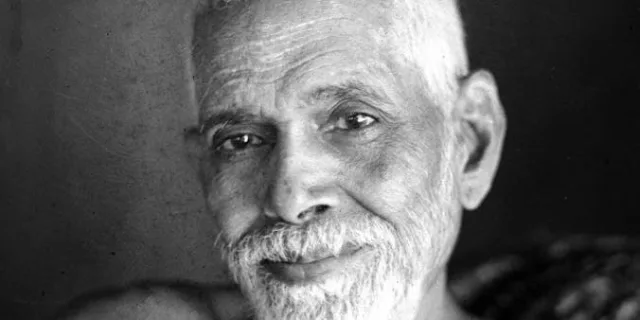
While most spirituality at the time was focused on ritual and devotion, Shankara promoted the path of knowledge, proposing that we can prove the ultimate undivided nature of reality through textual and philosophical exposition. But Advaita took a new turn in the 20th century with Ramana Maharshi, a brilliant Indian sage who revolutionized spiritual practice by emphasizing self-enquiry.
One of the most widely respected non-dual teachers today is Adyashanti, who originally studied Zen formally but began to teach more direct path style after his awakening. Adyashanti recommends trying out the inquiry “what am I?”, which I found to land better than Ramana’s “who am I?”. The word “who” can tend to evoke dimensions of identity, which can be inspected to reveal their fabricated nature.
Can you really separate the two? Where do you draw the line? Have you ever had a sensory experience without awareness? Have you ever experienced awareness without a sensory experience? There is no line, no way that we can separate sensory experience from awareness. We must therefore conclude that awareness and sensory experience are in fact the same thing. This would then prove what all the non-duality teachers have been saying, that everything is one undivided field of awareness, that nothing exists that is not awareness. There is no separation between self and world, it’s all simply awareness. Separateness is only a mental construct, and as such can be deconstructed to experience non-duality.
1 Jul 2024
Widely celebrated neo-advaita teacher Rupert Spira has a great YouTube channel full of talks, pointing out instructions, and guided practices. Spira integrates many teachers and traditions into his work, but his main teacher, Fancis Lucille, also has a great YouTube channel. One of my personal favourite channels is Simply Always Awake by Angelo Dillulo (who also wrote Awake: It’s Your Turn, which is also one of my favourite books on non-duality, a must read if you really want to explore this topic).
I still think that one of the best introductions to non-duality in general is the conversation series Angelo had on ZDoggMD’s YouTube channel (part 1 is a fantastic intro, but parts 2 and 3 really get into it).
My sense, based on personal experience and observing others, is that you taking to the practice depends on your ability to catch a glimpse of non-duality. Try it out, and if you don’t experience an opening in any way after some exploration, I advise to return to a “bottom up” approach, with my usual recommendation being Vipassana practice as it’s straightforward and effective if practiced with skill and sincerity. Personally, Vipassana provides a solid foundation for my, and I sprinkle in non-dual inquiry here and there (along with Tantric practices that I discussed in the last article in this series).