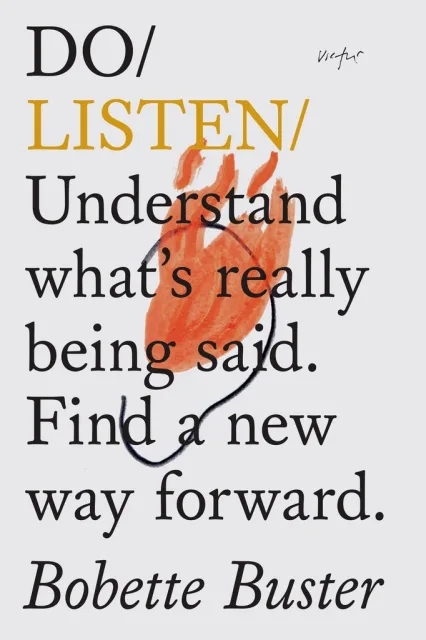
Do Listen – Understand What’s Really Being Said. Find a New Way Forward
Bobette Buster
Listening is a powerful way to connect with others and understand their stories. It can change both the listener and the storyteller, creating deep emotional bonds. By practicing attentive listening, we open ourselves to new perspectives and foster empathy in our relationships.
22 Oct 2024
The hidden world reveals itself when we listen.
This book is about rediscovering the lost art of listening, and then using that ability to form deeper connections and generate moments of wonder. Once you listen well to another person, you both connect. You are never the same again. We break through our own limitations and self- interest.
My process is this: I take the time necessary, and I ask simple questions, to open up a common space between us, such as:
— ‘What happened next?’
— ‘What time of day was it?’ ‘Where were you?’ ‘What do you remember from that moment?’
— ‘Why do you think you did that?’
These kinds of questions always elicit vivid memories and energise the storyteller’s passion for the story.
I acknowledge the storyteller’s moment of courage – that moment when they made a significant change in their life – because that moment is inevitably why they have chosen to tell this story, though they typically didn’t realise that was why, not at first.
As the storyteller becomes more relaxed, I embolden them by asking the following:
— ‘How did you feel?’ (Normally, they can’t answer the ‘feeling’ question too well.)
— ‘How do you feel now?’
Often they are deeply moved – because in your listening to them, you have brought them out into a wider, more open space.
They have felt heard. There is great power is this act. A new trust has been born.
The universe – the sun, stars and wind – conspires to slow us down, to pause, to take a breath, and in doing so, gradually we find ourselves stilled into a state of gratitude for being alive. Even just for a moment. Our ears can help us do this. Here’s a short exercise to tune in to the power of listening:
Go for a walk in an urban park, along the shoreline of a beach or stroll down a leafy street where you will undoubtedly hear the chorus of birds, or the leaves rustling. Take time for nature and tune in to your surroundings.
While you’re on your walk, take the time to rediscover all those sounds from the natural world seeking you out to grab your attention. Then note how you feel on your return. Perhaps time has somehow expanded around you. And maybe your state of mind, the people you encounter, and the rest of your day will be better for it.
23 Oct 2024
- Try and remember a favourite sound memory from your childhood
Using an audio recording device, such as your smartphone, record a voice memo and tell yourself the story of what that sound means to you now.
- Create an aural recording of a loved one
Think about your nearest and dearest – relatives, friends, even a mentor. Again, using your smartphone, or any recording device, take a few minutes to capture their laughter or speaking voice.
Also consider recording the everyday chatter you hear around you. Record your children or nieces and nephews as they grow up. Just have them say a few things – you’ll be very grateful to rehear their two-year-old or twelve-year-old voices and laughter much later on. Have your elders tell an anecdote or read a favourite poem aloud. Or simply capture your family chatting, laughing, eating a meal.
Once you have your recordings, simply label and upload these sound memories to your computer or the cloud, and maybe even add a photograph of the speaker.
The next time you want to watch a film, choose one of the iconic sound-design breakthrough films I’ve listed in the Resources section at the end of the book. This time, as you view the film, listen for how the sound design – not just the music – and the silence are orchestrated to make your cinematic experience far more immersive and emotionally moving.
Exercise: A 5-minute listening practice
Someone once said that we should never underestimate the 5-minute conversation with a 16-year-old. Can you find five minutes to give to someone – perhaps someone you know you should listen to more, or someone who simply needs your time and focus, even just for a few minutes? Simply listen to the other person without judging, or reacting with your eyes or sighs or any audible reactions.
See what happens ...
Look up and around. Find one beautiful thing to focus on – the sky, clouds, a tree – then:
— Pause. Just listen. You will hear a rattling of thoughts, lists, worries – this is what meditation gurus call your ‘monkey mind’.
— Allow your monkey mind to flow past you for a minute or two. Acknowledge any ‘white noise’, the irritating sound of a lawnmower or faraway noise you can’t control. Ignore it all.
— Only. Listen. To. Yourself.
— Breathe in seven beats. Breathe out eleven beats. Repeat for one minute.
— Focus on your breath. If your mind drifts, choose just one word to guide you back to your breath – make it a positive word. If you are afraid, anxious or angry, feel free to shout, scream (yes, that’s allowed!) Just let it all out.
— Then breathe. And Listen.
This will be difficult at first. You will become easily distracted or bored. But if you can give yourself five minutes a day for 180 days, this practice will change your life. Like strengthening a muscle, see if you can work up to twenty minutes, interspersed throughout the day. Create a pattern. This is an intention – a promise to yourself.
Here is a selection of films with masterful sound design.
2001: A Space Odyssey,
dir. Stanley KubrickAmerican Graffiti
dir. George Lucas
sound by Walter MurchApocalypse Now
dir. Francis Ford Coppola
sound by Walter MurchThe Birds
dir. Alfred HitchcockBlade Runner
dir. Ridley ScottBlue Velvet
dir. David Lynch
sound by Alan SpletBraveheart
dir. Mel Gibson
sound by Anna BehlmerBreathless
dir. Jean-Luc GodardCitizen Kane
dir. Orson WellesA Clockwork Orange
dir. Stanley KubrickThe Conversation
dir. Francis Ford Coppola
sound by Walter MurchThe Elephant Man
dir. David Lynch
sound by Alan SpletEraserhead
dir. David Lynch
sound by Alan SpletET
dir. Steven Spielberg
sound by Ben BurttFinding Nemo
dir. Andrew Stanton
sound by Gary RydstromGladiator
dir. Ridley Scott
sound by Karen Baker Landers and Per HallbergThe Godfather & Godfather II
dir. Francis Ford Coppola
sound by Walter MurchGravity
dir. Alfonso Cuarón
sound by Glenn FreemantleInside Out
dir. Pete Docter
sound by Ren KlyceJurassic Park
dir. Steven Spielberg
sound by Gary RydstromLincoln
dir. Steven Spielberg
sound by Gary Rydstrom and Ben BurttLuxo Jr.
dir. John Lasseter
sound by Gary Rydstrom and Ben BurttMad Max Fury Road
dir. George Miller
sound by Mark ManginiOrdinary People
dir. Robert Redford
sound by Kay RoseRaging Bull
dir. Martin Scorsese
sound by Frank WarnerRear Window
dir. Alfred HitchcockA River Runs Through It
dir. Robert Redford
sound by Gary RydstromSaving Private Ryan
dir. Steven Spielberg
sound by Gary RydstromSchindler’s List
dir. Steven SpielbergThe Social Network
dir. David Fincher
sound by Ren KlyceSpartacus
dir. Stanley KubrickA Star is Born
dir. Frank Pierson
(sound overseen by Barbra Streisand)Star Wars Episodes IV, V & VI
dir. George Lucas
sound by Ben BurttToy Story 1, 2 & 3
dir. John Lasseter
sound by Gary RydstromTin Toy
dir. John Lasseter
sound by Gary RydstromTrainspotting
dir. Danny BoyleUp
dir. Pete Docter
sound by Tom MyersWall-E
dir. Andrew Stanton
sound by Ben Burtt