Becoming unLLMable
Sari Azout
Sari Azout discusses how our perception of AI is shaped by language and expectations. Instead of fearing AI as a replacement for humans, we should focus on how it enhances our capabilities and creativity. The real challenge lies in maintaining our humanity amidst technology's influence.
10 May 2025
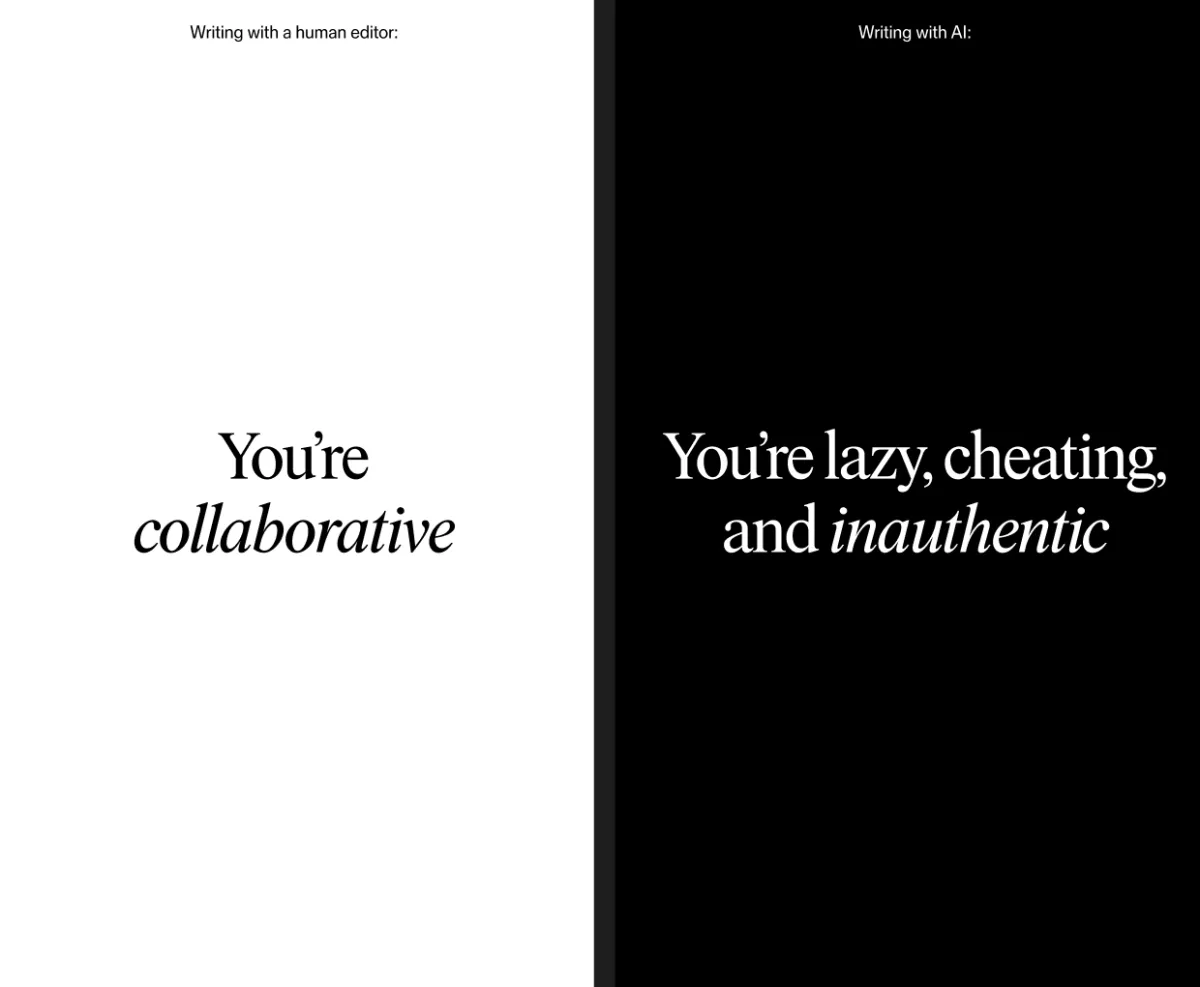
If you’re writing with the help of a human editor: You’re collaborative.
If you’re writing with AI: You’re cheating, lazy, inauthentic.
Similar activity, completely different emotional response.
So let’s run this exercise again, except this time imagine OpenAI had been called OpenCI—Open Collective Intelligence.
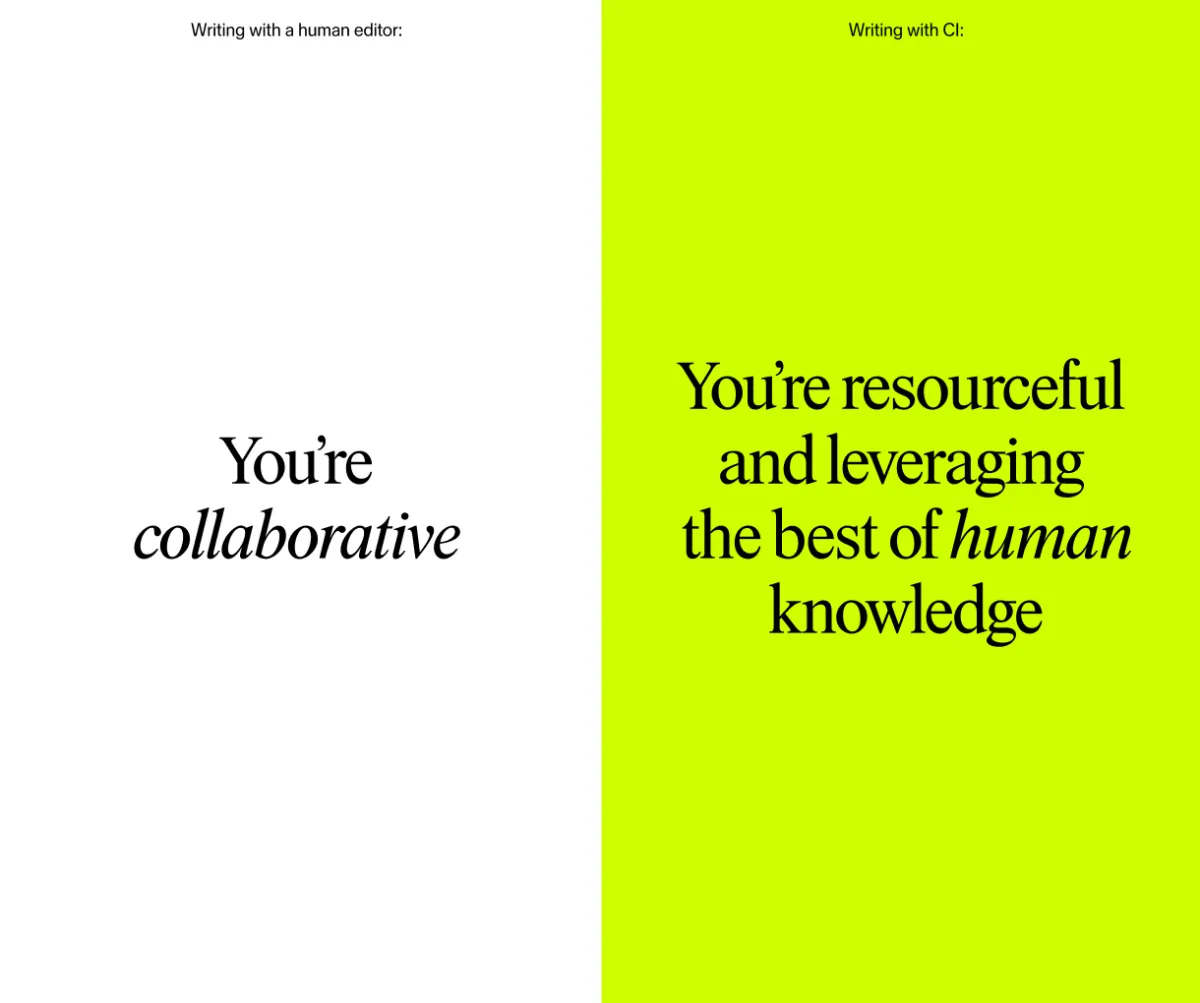
Writing with a human editor: You’re collaborative.
Writing with CI: You’re resourceful and leveraging the best of human knowledge. In fact, I’d go as far as to say that if you weren’t using using CI, you might even be judged. That would be like having Gabriel García Márquez and Virginia Woolf in the room offering you feedback... and asking them to leave.
See how emphasizing the collectivity—something built on the commons—over the artificiality of it—a feat of technological genius—gives us an entirely new way to relate to it.
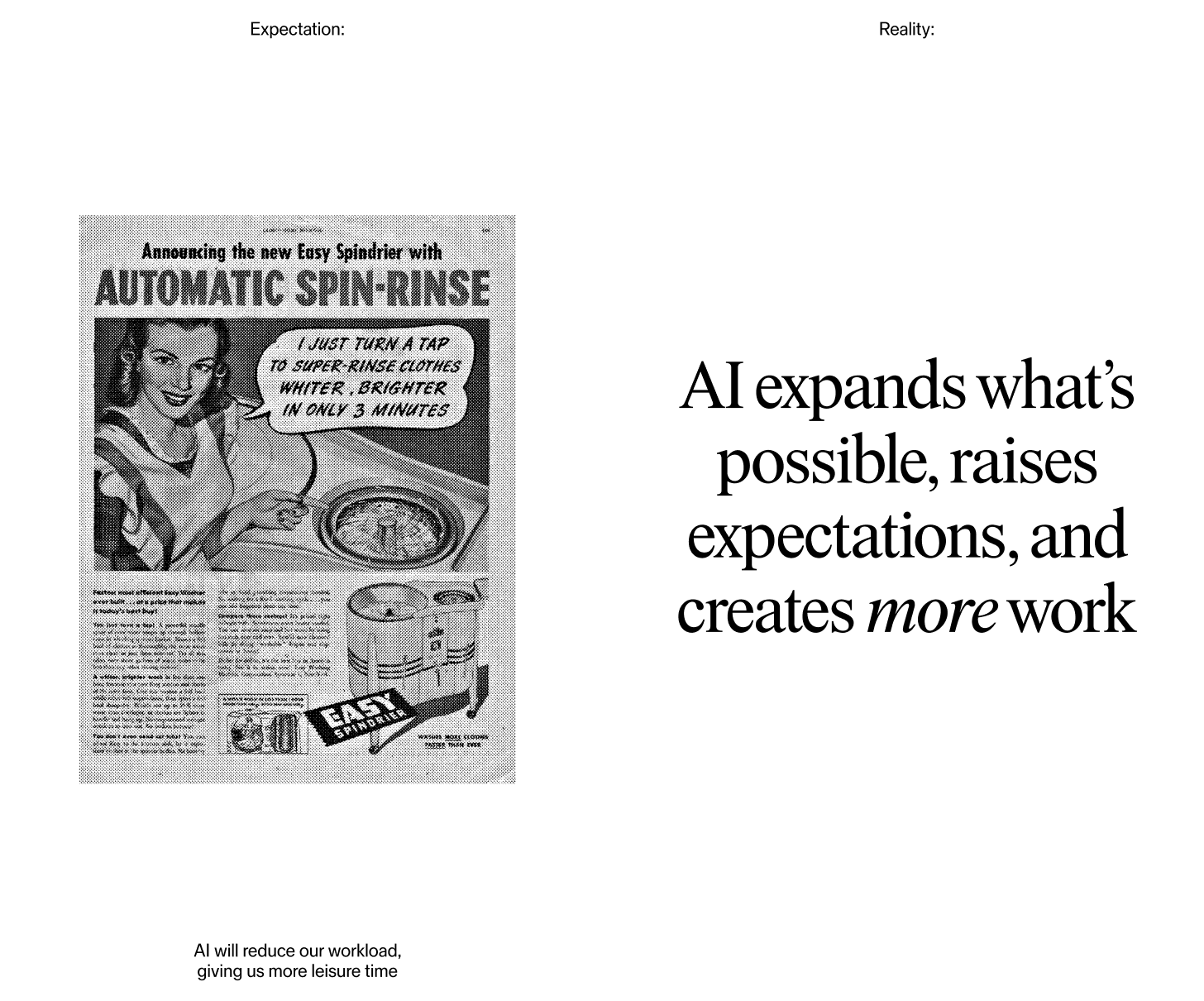
I expected AI to reduce my workload and free up time – the dream of robots doing our jobs while we chill on hammocks all day.
Instead, I was caught in a paradox: the amount of things that are now possible and exciting and worth exploring because of AI greatly exceeds the amount of time I save using AI.
[
LLMs may soon do many things we once thought only humans could.
But we’ll keep moving up the stack.
We’ll take those outputs as inputs—and dream bigger.
Some human skills will be commoditized.
But human beings will not.We are unLLMable.
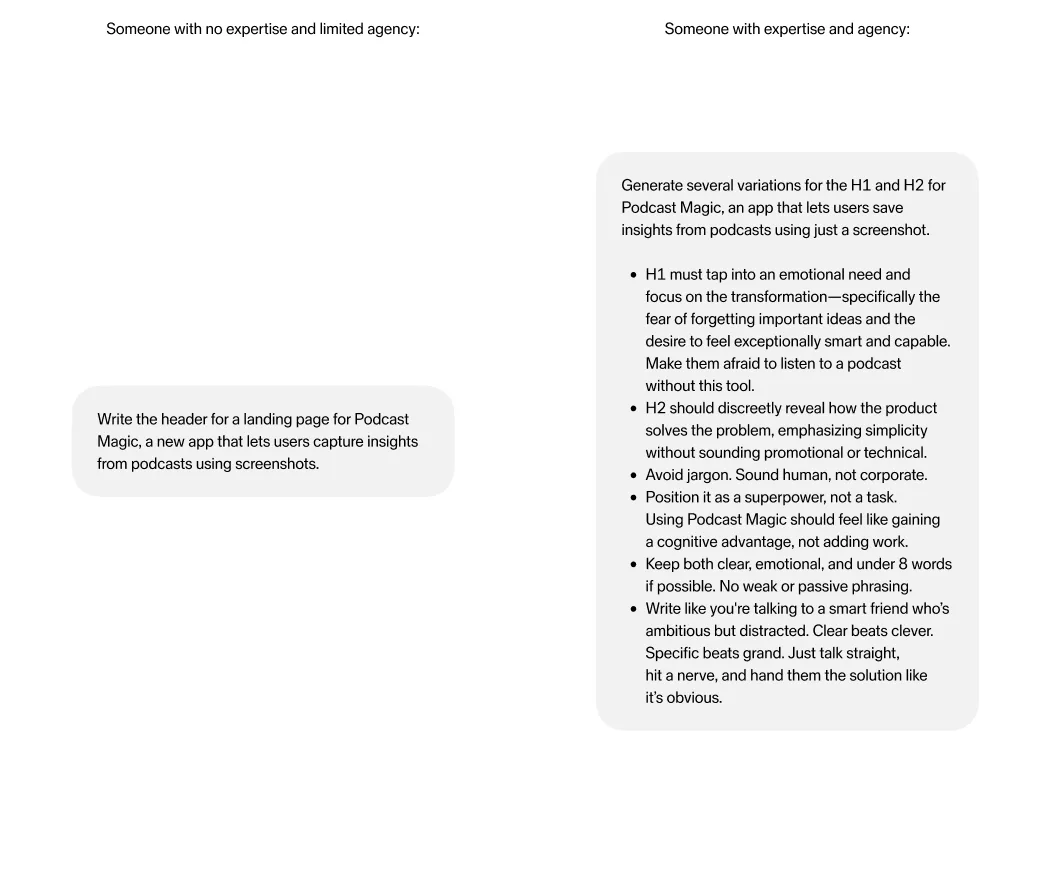
On the left: here’s what I would prompt if i just want to get the task over with —maybe because I’m not an expert, or maybe they just don’t care. Either way I’m inputting a generic prompt and likely accepting whatever mediocre output the AI generates.
On the right what I would prompt to give it more pzazzz. Reflecting my understanding of positioning and psychology. I will provide the right context, define the tone and personality for the brand, ask the AI to generate multiple variations, and keep pushing and pressure-testing and giving feedback to the models until the right words hit.
I saw someone define modern art as:
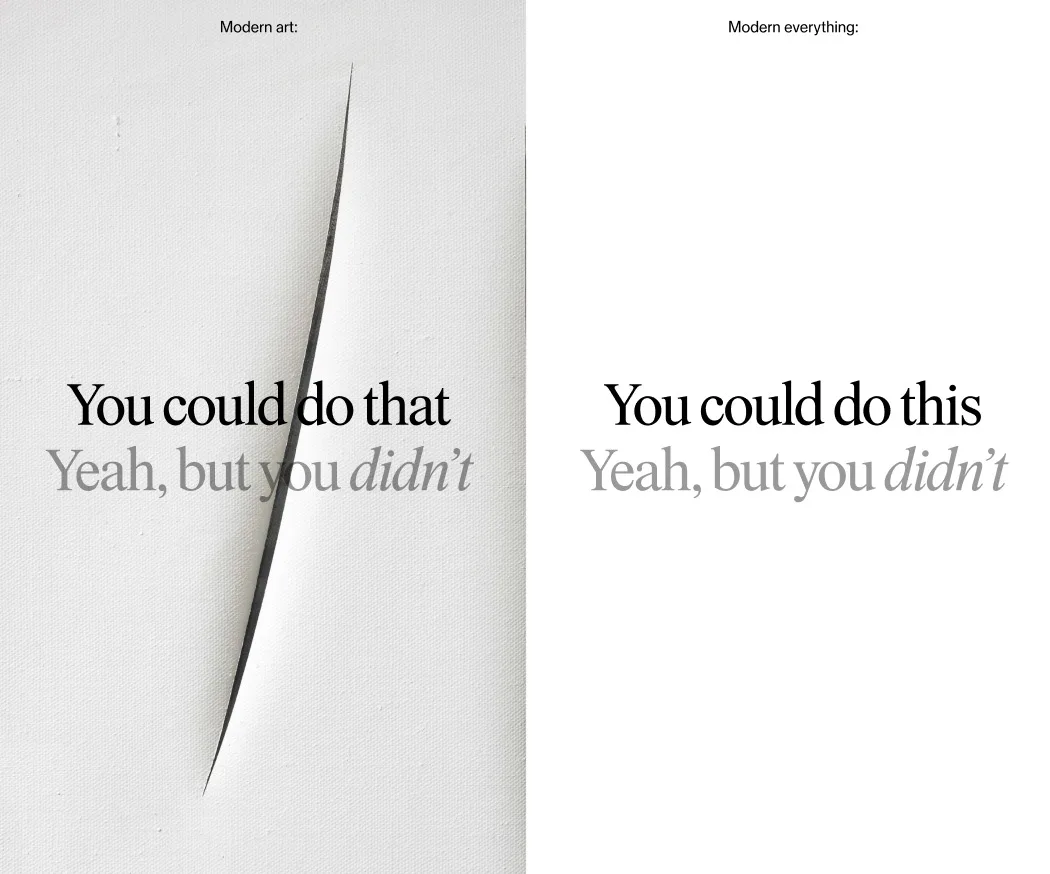
Modern art = You could do that + Yeah, but you didn’t
You know the feeling—you see a plain black square painting that goes for $80 million at an art auction and you think, Come on. I could’ve done that.
But you didn’t.
They did.They knew what was worth doing, when, and how to frame it so it mattered.
And I think more and more, this dynamic is going to show up outside of art.
Things will appear simple or easily replicable on the surface.
You’ll hear people say:
“Anyone could’ve made that with ChatGPT.”But the more and better access everyone has to tools, the clearer it becomes that the final bottleneck to great work is not knowledge or information. Heck it’s not even intelligence—it’s that elusive, intangible, sublime quality—call it taste, imagination, creativity, courage, judgment, intuition, agency.
We worry AI will replace writers. But have you seen most of what’s online? Half the internet is engagement farmers on LinkedIn selling you 5 steps to 10x your productivity by 6am.
You can see this mindset has infected everything:
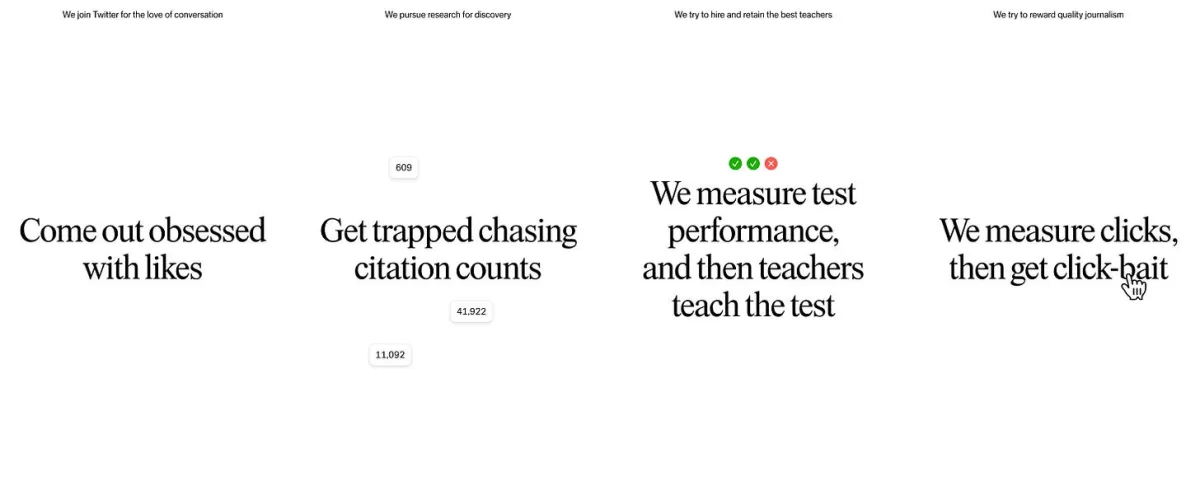
• We join Twitter for the love of conversation—come out obsessed with likes.
• We pursue research for discovery—then get trapped chasing citation counts.
• We try to hire and retain the best teachers, so we measure test performance, and then teachers teach the test.
• We want to reward quality media. So we measure clicks. Then get click-bait.
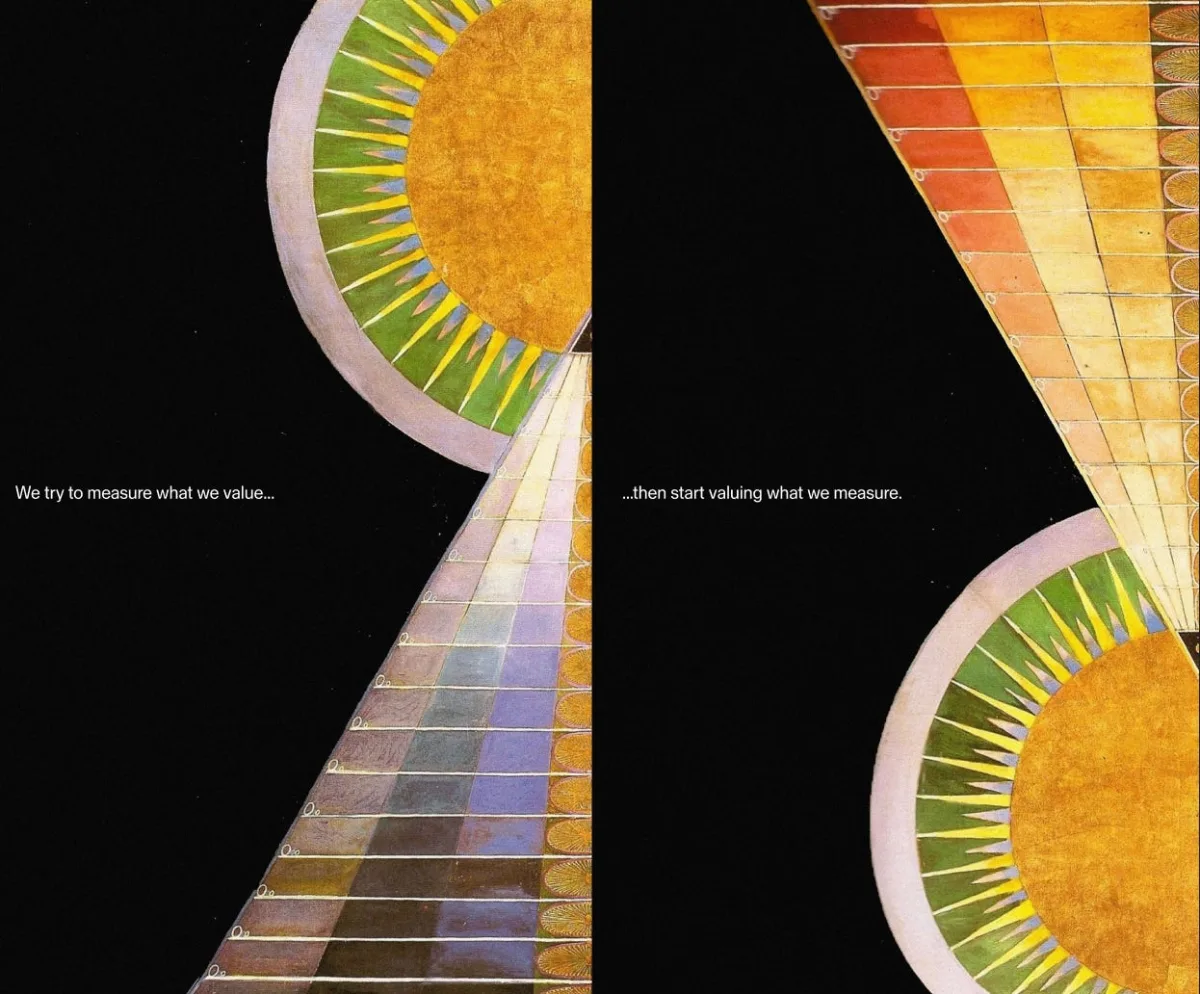
Said differently, we try to measure what we value.
But we inevitably end up valuing what we measure.
And what can be measured tends to be…the mechanical stuff.
Not only do numbers not capture what matters, they are also extremely open to manipulation.
The idea that our worth can be measured in KPIs and OKRs and numbers that can be seen and tracked and be made legible to spreadsheets—is a modern invention.
In Ancient Greece, the good life was defined by wisdom and contemplation.
In medieval Europe, worth was tied to religious devotion.
In many indigenous cultures, status came from storytelling abilities, spiritual connections, and relationships.
We just decided at some point that progress meant numbers on a spreadsheet.
AI is just holding a mirror to us.
And in that reflection, awakening our desire to return to the things that can't be easily quantified.
To illustrate the absurdity of this framing, let's replace "AI" with "technology":
The debate between "Humans vs AI" is as nonsensical as:
Humans vs Pencils.
Humans vs. Calculators
Humans vs. MapsTechnology is not our rival.
It is simply applied human knowledge.
But here’s the thing about AI.
Compared to other technologies with clear founding missions, AI is an ideological blank canvas.
The Internet was about openness.
Blockchains and crypto are anti-institutional, they represent freedom and trustlessness.
But there is nothing missionary built into AI itself.